 how-to
What Happens After Bail Is Posted? A Step-by-Step Guide
Table of Contents
- What Happens After Bail Is Posted: The Release Process
- How Long Does It Take to Get Out of Jail After Bail Is Posted?
- Conditions of Release After Bail: What You Must Follow
- Responsibilities of a Bail Bond Co-Signer
- What Happens If the Defendant Misses a Court Date?
- Understanding Bail Exoneration and Getting Your Money Back
- Financial Recovery of Bail and Case Resolution
- Checklist for the First 48 Hours After Release
- Frequently Asked Questions
Last Updated: September 8, 2026
What Happens After Bail Is Posted: The Release Process
Posting bail is only the first step. The release process begins when the court or jail accepts the bail payment or bond paperwork, triggering administrative steps that end with the defendant walking free.
The moment bail is posted, the jail's booking division verifies the paperwork and updates the defendant's custody status. This verification involves confirming the bond is valid, checking for any holds from other jurisdictions, and processing the release documents. According to the National Association of Criminal Defense Lawyers on pretrial release procedures, jails follow strict administrative protocols before any inmate is released, even after bail has been accepted.
The Administrative Steps Inside the Jail
The process is a sequence of checks. Here is what typically happens after the jail accepts the bond:
- Verification of the bond: The jail's records division confirms the bond paperwork is signed, stamped, and valid. For a surety bond, they may call the bail agency to verify the bond number and the agent's signature.
- Check for outstanding holds: The system automatically checks for detainers from other jurisdictions, such as a warrant from a neighboring county, an immigration hold, or a parole violation. Any hold overrides the bail release and keeps the defendant in custody.
- Processing release documents: The jail generates a release order, which must be reviewed and approved by a shift supervisor. This is a manual step that can take time during shift changes.
- Property return and checkout: The defendant receives their personal belongings, signs for any valuables, and changes out of jail clothing. This step alone can take 30 to 60 minutes during busy periods.
The Logistics No One Tells You About
The defendant is often released at odd hours, sometimes in an unfamiliar part of town. Plan for the following:
- Transportation: The jail will not provide a ride. If the defendant was arrested while driving, their vehicle is likely in an impound lot. Agree on a meeting point in advance, and have a backup plan if the release happens at 3:00 AM.
- Immediate check-in requirements: Some courts impose a condition that the defendant must check in with a pretrial services officer within 24 to 48 hours of release. Missing this first check-in is a technical violation that can lead to bail revocation.
- GPS monitoring expectations: If the judge ordered electronic monitoring, the defendant must report to the monitoring agency within a set window, often the same day. The agency will fit the ankle bracelet and explain the charging and reporting schedule. Failure to appear for the fitting is treated as a violation.
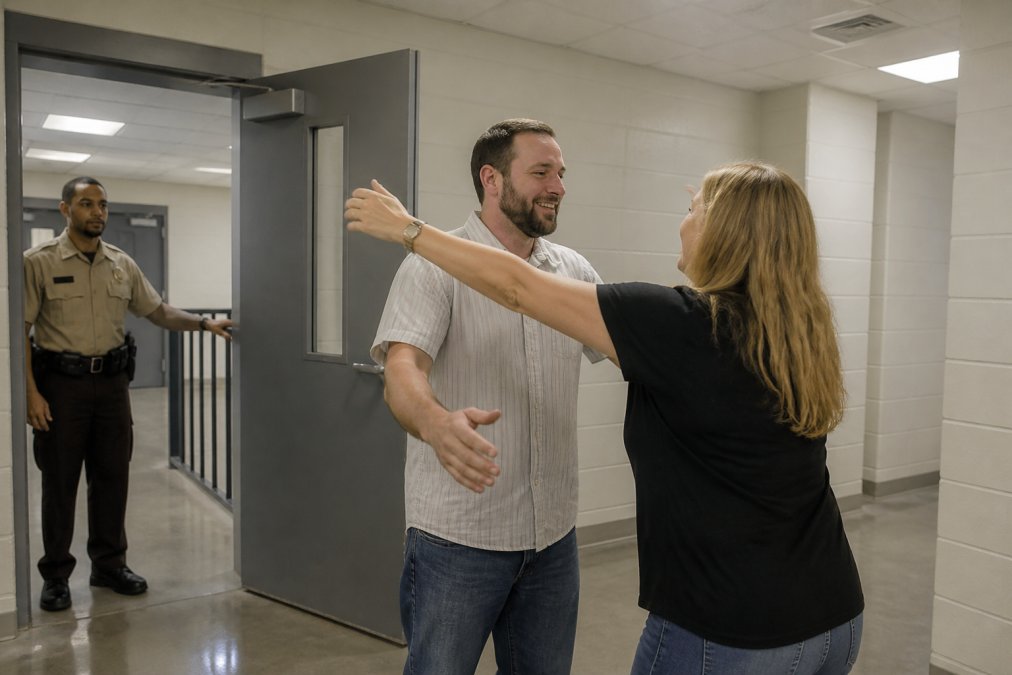
Once the jail completes its internal checks, a corrections officer will call the defendant's name, return their personal property, and walk them through the final release point. The entire process after bail is posted typically moves quickly, but the speed depends on how busy the facility is at that hour.
How Long Does It Take to Get Out of Jail After Bail Is Posted?
The release timeline after bail is posted usually falls between one and four hours, though several factors can extend this window (bjs.ojp.gov). No bondsman can guarantee an exact minute because the jail controls the release clock.
Processing speed depends on the facility's current workload, the time of day, and whether the defendant has any outstanding holds. A release at 2:00 AM on a quiet night moves faster than one during a busy weekday shift. Weekends and holidays often see slower processing because of reduced staffing.
If several hours pass without movement, the bondsman can call the jail to check on the status. A legitimate bail bond service tracks the paperwork and flags any problems that slow down the release.
Conditions of Release After Bail: What You Must Follow
Release on bail is not unconditional freedom. The court attaches specific conditions the defendant must obey until the case reaches resolution; violating them can result in the bail being revoked.
Common conditions include appearing at all scheduled court dates, avoiding contact with the alleged victim, refraining from drug or alcohol use, and complying with travel restrictions. The judge may also order ankle-bracelet monitoring, regular check-ins with a pretrial services officer, or participation in a treatment program. Each condition is spelled out in the release paperwork, which the defendant signs.
The conditions of release after bail vary from case to case and jurisdiction to jurisdiction. A first-time nonviolent offense typically carries fewer restrictions than a case involving domestic violence or weapons. The judge sets these terms during the bail hearing or arraignment.
Responsibilities of a Bail Bond Co-Signer
When a family member uses a surety bond instead of paying cash bail, they take on serious legal obligations as the co-signer. These responsibilities extend far beyond providing the premium payment.
The co-signer guarantees that the defendant will appear at every required court date. If the defendant fails to appear, the co-signer becomes financially responsible for the full bail amount, and the court may issue a bench warrant for the defendant's arrest.
A responsible co-signer stays in regular contact with the defendant, reminds them of upcoming court dates, and reports any concerns to the bondsman immediately. The co-signer must also keep their own contact information current with the bond agency.
What Happens If the Defendant Misses a Court Date?
A missed court date triggers serious consequences. The judge issues a bench warrant for the defendant's arrest, the bail bond is placed in forfeiture, and the co-signer faces financial liability for the full bail amount.
The court typically allows a brief grace period before declaring the bond forfeited. During this window, the bondsman and co-signer may be able to locate the defendant and bring them to court voluntarily. This process, known as surrendering the defendant, can prevent the full financial loss but requires immediate action.
If the defendant cannot be found, the court orders forfeiture of the bond. The bondsman then has a set period to either produce the defendant or file a motion to set aside the forfeiture. Texas court rules on bond forfeiture procedures outline specific deadlines and filing requirements that must be met to protect the bond. The co-signer should contact the bondsman the moment they learn the defendant missed court, not wait for the court to act.
Understanding Bail Exoneration and Getting Your Money Back
Bail exoneration is the legal process that releases the surety from its obligation once the case concludes. When cash bail was posted directly with the court, exoneration triggers the refund process. When a surety bond was used, the bond is discharged and the co-signer's financial exposure ends.
The court enters an order of exoneration when the defendant has satisfied all conditions and the case reaches its conclusion. This can happen at dismissal, after a plea agreement, or following an acquittal. Until exoneration is granted, the bond remains active and the co-signer remains liable.
Getting money back from a cash bail deposit requires patience and attention to paperwork. The refund does not happen automatically on the day of the final hearing. The court clerk must process the exoneration order, and the person who posted the cash must file the appropriate request. Courts may deduct administrative fees or apply the funds to outstanding fines and court costs before releasing the balance.
Financial Recovery of Bail and Case Resolution
The financial picture of bail depends entirely on which method was used. Understanding the difference between cash bail and a surety bond prevents costly surprises.
With cash bail, the full amount is paid to the court and held until the case concludes. If the defendant makes every appearance and complies with all conditions, the court returns the money minus any approved deductions. With a surety bond, the defendant or co-signer pays a non-refundable premium to the bondsman, typically a percentage of the total bail amount. That premium is never returned, regardless of the case outcome.
How to Actually Get Your Cash Bail Money Back
The refund process is not automatic, and the court clerk will not call you when the check is ready. Here is the step-by-step process for recovering a cash bail deposit:
- Obtain the order of exoneration: The judge signs an order of exoneration when the case is dismissed, after a plea deal, or following an acquittal. Ask the defense attorney for a certified copy of this order. Without it, the clerk cannot release the funds.
- File a motion for return of bail (if required): Some courts require a separate motion to trigger the refund, even after exoneration. Your attorney can file this, or you can request the form from the court clerk. The motion must name the person who actually deposited the cash.
- Go to the court clerk's office in person: Bring the certified exoneration order, a government-issued ID, and the original receipt from the bail deposit. The clerk will verify the case number and the deposit amount.
- Complete the refund voucher: The clerk will process a payment voucher. Depending on the court, the check is either issued on the spot or mailed within 4 to 6 weeks. Ask about the timeline before you leave.
- Watch for deductions: Courts routinely deduct administrative fees, unpaid fines, court costs, or restitution from the cash bail before issuing the refund. Ask the clerk for an itemized statement of any deductions.
What Happens to Collateral on a Surety Bond
The financial recovery of bail also involves collateral pledged to secure the bond. Many bonds require collateral such as a vehicle title or property deed when the defendant is considered a flight risk. Once the case is exonerated, the bondsman releases the collateral back to the co-signer. Keeping all paperwork from the original bond agreement is essential for proving your claim to that collateral.
Common Reasons Refunds Are Delayed
A refund can stall for reasons unrelated to the case itself. Common issues include:
- The court clerk has not received the signed exoneration order from the judge's chambers.
- The defendant has unpaid fines in a different case that the court is applying the bail to.
- The person who posted the bail has moved and the court cannot verify their identity.
- The case file is missing the original bail receipt.
Refunds typically take longer in busy metropolitan courts than in rural counties. If the refund has not arrived within 60 days of the exoneration order, contact the court clerk directly and ask for the status in writing. If the clerk does not respond, a motion to compel the return of bail may be necessary.
Checklist for the First 48 Hours After Release
The first two days after release are critical for setting the case up for a successful resolution. Use this checklist to stay organized.
- Confirm the next court date and write it down in multiple places, including a phone calendar with reminders set a week, a day, and an hour before
- Read the conditions of release paperwork thoroughly and identify any requirements like check-ins or classes that must start immediately
- Contact a criminal defense attorney if one is not already retained, since legal counsel can file motions and negotiate before the next hearing
- Call the bondsman to confirm the bond is active and ask about any reporting requirements the agency has
- Avoid any contact with the alleged victim or restricted locations named in the release conditions, no matter how innocent the interaction may seem
- Gather identification documents and proof of address, which the court may request at the next appearance
- Arrange transportation to the courthouse for the upcoming hearing and plan to arrive at least 30 minutes early
The first 48 hours set the tone for the entire pretrial period. Defendants who stay organized, communicate openly with their bondsman and attorney, and treat every condition seriously are far less likely to face additional charges or bond revocation.
The hours after bail is posted bring relief, but they also bring responsibility. Understanding the release process, the conditions of release after bail, and the financial obligations tied to the bond protects everyone involved. NATIONAL BAIL BOND OF Lubbock has over 50 years of experience guiding defendants through the court system, and our team is available 24/7 to answer questions, verify the legitimacy of your bond, and keep the process moving. Contact us directly for immediate assistance with a release or to confirm the details of an active bond.
Frequently Asked Questions
Does posting bail mean the charges are dropped?
No. Posting bail only secures the defendant's release from custody while the case is pending. It does not mean the charges are dropped or that the person is found innocent. The criminal case continues through the court system, and the defendant must appear at all scheduled hearings. The bail money or bond ensures the defendant returns for those court appearances. The charges are only resolved when the case is dismissed, a plea agreement is reached, or a trial verdict is issued.
Why does it take several hours to be released after bail is posted?
Even after a bond is posted, the jail must complete its own administrative processing. This includes verifying the bond paperwork, checking for other holds or warrants from other jurisdictions, returning the defendant's property, and completing the final release paperwork. On busy days, the jail may process releases in order, which can add to the wait. The timeline for release after bail is posted can vary depending on the jail's current workload.
What happens if a defendant fails to appear in court after being released?
If a defendant fails to appear for a scheduled court date, the judge will likely issue a bench warrant for their arrest. The court may also forfeit the bail bond, meaning the full bail amount becomes due. For a surety bond, the co-signer becomes responsible for paying that amount to the bail bond company. The defendant's failure to appear can also lead to additional criminal charges. Contacting your bail agent immediately if a court date will be missed is critical to potentially resolve the issue before a warrant is issued.
Who is responsible for ensuring the defendant attends court dates?
The defendant is primarily responsible for attending all scheduled court appearances. However, when a bail bond company is used, the co-signer also takes on significant responsibility. The co-signer signs an indemnity agreement, making them financially responsible for the full bail amount if the defendant fails to appear. Many bail agents will contact the co-signer to check on the defendant's status. The co-signer can also be asked to help locate the defendant if they miss a court date, which is why understanding the responsibilities of a bail bond co-signer before signing is essential.