 how-to
Lubbock Bail Bonds Payment Plans: How to Set One Up
Table of Contents
- How Bail Bonds Payment Plans Work in Lubbock
- Your Bail Bond Payment Options at a Glance
- How Much of a Bail Bond Down Payment You'll Need
- Bail Bond Collateral Requirements and Co-Signer Rules
- Step by Step: Requesting a Payment Plan
- Questions to Ask a Bail Bondsman Before You Sign
- What Happens If You Miss a Payment
- Frequently Asked Questions
Last Updated: October 20, 2026
How Bail Bonds Payment Plans Work in Lubbock
A bail bond payment plan lets you pay your share of a bond premium over time instead of in one lump sum. At National Bail Bond of Lubbock, we help families across Lubbock and Hockley Counties who need a defendant released without draining every dollar on day one.
The mechanics are simple: a judge sets a bond amount, a bondsman posts the full amount with the jail, and you pay a premium for that risk, which a payment plan spreads across agreed installments.
The Bond Premium and What It Covers
The bond premium is the fee a bondsman charges to post the full bond amount on your behalf. It is not a deposit you get back, and it is not the bond itself. In Texas, the premium is set by the surety company and regulated under the Texas Occupations Code, so it does not vary wildly from agency to agency for the same bond.
The premium covers the bondsman's risk, paperwork, court appearances, and case tracking. It does not cover fines, court costs, or attorney fees.
Why a Payment Plan Exists
Most families do not have thousands of dollars sitting idle when an arrest happens at 2 a.m. A payment plan lets you secure a jail release now and settle the premium in affordable installments.
The trade-off is real: you pay more over time and take on an obligation with consequences if you miss a payment. Better to understand that upfront than discover it at the worst possible moment.
Your Bail Bond Payment Options at a Glance
There is no single plan that fits every family, so most agencies offer a few structures. Here is how they generally compare.
| Option | How It Works | Best For |
|---|---|---|
| Lump sum | Full premium paid at signing | Families with cash on hand who want the case closed financially |
| Down payment plus installments | Partial payment upfront, balance split over weeks or months | Most families; balances flexibility with a clear end date |
| Weekly or bi-weekly schedule | Smaller, frequent payments | Tight, predictable budgets |
| Monthly schedule | Fewer, larger payments | Households paid once a month |
| Collateral-backed plan | Property or a co-signer secures the balance | Larger bonds or thin credit |
Ask for the total cost of each option, not just the down payment, the cheapest-looking plan upfront is not always cheapest overall.
How Much of a Bail Bond Down Payment You'll Need
A bail bond down payment is the portion of the premium you pay at signing to get the bond posted, the number that decides whether your family member sleeps at home tonight.
Down payment requirements vary by agency and bond size. A bondsman weighs the bond amount, the defendant's history, and your ability to keep up with the schedule, never assume a friend's quoted percentage applies to your case.
Worked Cost Example (Hypothetical, for Illustration Only)
Actual terms vary by agency, bond size, defendant history, and collateral. The numbers below are hypotheticals showing how the pieces fit together, not a quote.
Assume a judge sets a $10,000 bond.
Now layer a down payment and schedule on top of that $1,000 premium:
| Component | Hypothetical Amount | What It Means |
|---|---|---|
| Bond amount | $10,000 | Set by the judge; posted by the bondsman |
| Premium (10% example) | $1,000 | Non-refundable fee for posting the bond |
| Down payment at signing | $300 | Portion of premium paid upfront |
| Remaining balance | $700 | Spread across the schedule |
| Schedule | $175/week for 4 weeks | Example installment structure |
| Total paid over life of plan | $1,000 | Premium only, court costs and fines are separate |
A second scenario shows why the down payment is not the whole story.
What the premium does not cover: fines, court costs, attorney fees, or any restitution ordered by the court. Budget for those separately.
What Can Move the Down Payment Up or Down
Agencies typically adjust the down payment based on risk and cash flow, not just bond size:
- Larger bond, higher down payment. The bondsman is staking more money with the jail, so the upfront ask usually rises.
- Strong co-signer with verifiable income. Can lower the down payment because the agency has a second pocket to pursue.
- Collateral with clear equity. Real property or a vehicle with clear title can substitute for a larger cash down payment.
Ask specifically: "What would lower my down payment?" The answer tells you what the agency actually cares about.
Bail Bond Collateral Requirements and Co-Signer Rules
Collateral is property or a financial guarantee a bondsman holds to cover the bond if the defendant fails to appear. A co-signer, or indemnitor, signs the contract and accepts financial responsibility alongside the defendant.
Not every bond requires collateral. Many smaller bonds are approved on a co-signer with steady income and a clean record; larger bonds or flight-risk cases often require it.
What typically gets considered as collateral:
- Real property with equity
- Vehicles or equipment with clear title
- Cash or a savings account hold
The co-signer is not a formality. If the defendant misses court, the co-signer is on the hook for the full bond amount. Have that conversation honestly before anyone signs.
Step by Step: Requesting a Payment Plan
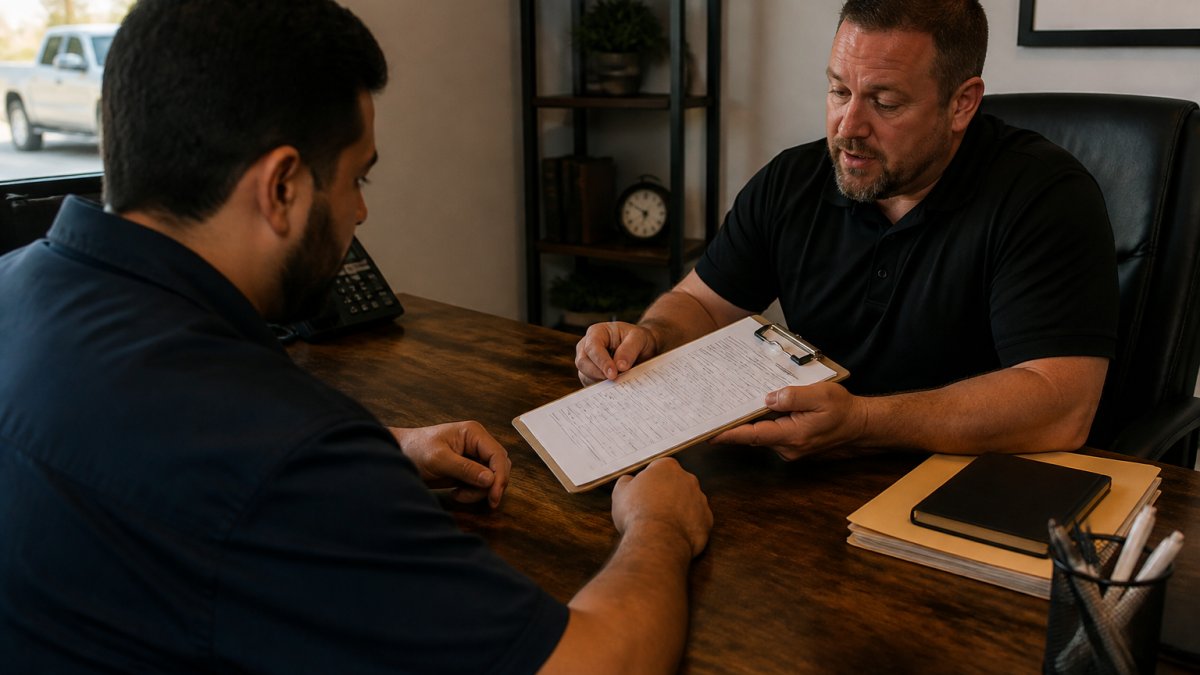
Requesting a bail bonds payment plan takes one phone call and a short conversation about the bond, the defendant, and your budget. Here is the sequence:
- Gather the basics. Full legal name of the defendant, date of birth, the jail holding them, and the bond amount if it has been set.
- Call and confirm availability. We are reachable 24/7, so late-night and weekend arrests are not a problem.
- Review the premium and total cost. Ask for the premium, the down payment, the schedule, and the total you will pay across the life of the plan.
- Submit your application. Expect questions about employment, income, residence, and the defendant's ties to the community.
- Sign the contract. Read every line, especially the missed-payment and forfeiture clauses.
- Pay the down payment. Get a receipt and a copy of the signed agreement.
- Bond is posted and release begins. We handle the jail paperwork and keep you updated on the release process.
What Approval Usually Depends On
Approval for a payment plan is not automatic, and it is not personal. A bondsman is deciding whether to stake real money on your reliability.
Factors that typically matter:
- Stability of income and employment
- Length of residence in the area
- The defendant's criminal history and prior court appearances
If you are declined, ask what would change the answer. Sometimes a co-signer or additional collateral is enough.
Questions to Ask a Bail Bondsman Before You Sign
Ask these before you put a signature on anything. A reputable bondsman will answer all of them without hesitation.
- Are you licensed and can I verify it with the state?
- Do you have a physical office I can visit?
- What happens if we miss a payment?
What Happens If You Miss a Payment
Missing a payment on a bail bond is not a small administrative slip. It can trigger consequences that escalate quickly, usually in a predictable sequence.
The Typical Escalation Sequence
- Grace period and contact. Many agencies build a short grace window into the contract and will call the indemnitor before taking action. Read your contract for the exact window; it is not uniform.
- Notice of default. If the payment is not cured, the agency sends written notice that the plan is in default. This is the point where the indemnitor's obligation becomes active, not theoretical.
- Revocation or surrender. The bondsman can revoke the bond and ask the court to return the defendant to custody, or arrange a surrender. This is the agency's leverage, and it is why the contract matters more than the sales pitch.
- Forfeiture. If the defendant misses a court date, separate from a missed payment, the court can declare the bond forfeited. The bondsman then owes the full bond amount to the court unless the defendant is produced or the forfeiture is set aside.
- Collateral claim and collections. The agency can claim collateral, pursue the co-signer for the balance, and in some cases file a civil suit on the indemnity agreement.
The Indemnitor's Real Exposure
The indemnitor, the co-signer, is not a reference. The indemnity agreement makes the co-signer financially responsible for the full bond amount if the defendant fails to appear, not just the unpaid premium: a missed $175 installment can expose the co-signer to a $10,000 bond obligation if the defendant also misses court.
Before anyone signs, the co-signer should be able to answer three questions in writing:
- What is the total bond amount I am indemnifying?
- What triggers my liability, a missed payment, a missed court date, or both?
- What collateral or property is pledged, and how would the agency claim it?
What to Do If You Cannot Pay
Call the agency before the due date, not after. Agencies would rather renegotiate a schedule than chase a forfeiture, which costs them time, legal fees, and reputation. Come to that call with specifics:
- The payment amount and due date you are at risk of missing
- What you can pay now, even if it is partial
- A proposed revised schedule with dates you can actually meet
Get any revised schedule in writing, an email or signed addendum. A verbal "we'll work with you" is not a contract modification.
Questions to Ask About Missed-Payment Terms Before You Sign
- Is there a grace period, and how many days is it?
- Is there a late fee, and how much is it per occurrence?
- Does a missed payment alone trigger revocation, or only a missed court date?
A reputable bondsman will answer all six without hesitation. If any answer is vague, get it in the written contract before signing.
Frequently Asked Questions
Will bail bonds take payments?
Many bail bond agencies, including National Bail Bond of Lubbock, offer installment arrangements so the premium does not have to be paid in one lump sum. The exact terms, including the down payment amount and how often you pay, are set by the agency and confirmed in writing before you sign. Ask for the payment schedule in writing, confirm whether weekly, bi-weekly, or monthly payments are available, and check what happens if a scheduled payment is late.
What costs should I ask about before agreeing to a bail bond payment plan?
Ask for the total premium, the down payment, the number of installments, and whether any administrative or processing fees apply. Confirm whether collateral or a co-signer is required and how collateral is returned once the case closes. Also ask what triggers additional charges, such as missed court dates or a bond reinstatement. Get every figure in writing and compare the total cost, not just the down payment, before you commit.
What happens if I miss a bail bond payment?
A missed payment can put the payment plan in default, and the agency may require the remaining balance immediately or ask for additional collateral. In serious cases, the bondsman can ask the court to revoke the bond, which means the defendant returns to custody. Call the agency before a payment is due if you expect a problem. Most offices will discuss a revised schedule, but only if you communicate early rather than after the deadline passes.
Can a bail bond payment plan require a down payment or collateral?
Yes. Most agencies require a down payment before posting the bond, and some require collateral such as a vehicle, property, or a co-signer's guarantee. The down payment reduces the balance financed through installments, while collateral protects the agency if the defendant fails to appear. Ask exactly what collateral is acceptable, how it is valued, and when it is released, so there are no surprises when the case ends.