 How-to
What Happens to Charges After Jail Release
Last Updated: November 16, 2026
Quick Summary
What happens to charges after jail release is that the case usually stays open: release is about custody, not the case, so a prosecutor may still review the file and file formal charges days or weeks later. Check the court clerk in the county of arrest to confirm whether a case number exists and a court date is scheduled.
- Release from county jail does not mean charges were filed or that they never will be.
- Search the court clerk first, then the online docket, prosecutor's office, and a defense lawyer.
- A docket entry showing NOF usually means no file yet, not that the case is over.
- Once charges are filed, a case number is assigned and an initial appearance or arraignment is scheduled.
- Dropped charges do not automatically disappear; expunction or record sealing may apply depending on state law.
Table of Contents
- Why Release From Jail Does Not Mean the Case Is Closed
- How to Check Pending Criminal Charges After Release
- What Happens After Charges Are Filed
- What Happens After Arraignment
- Reading Your Release Paperwork and Release Conditions
- If Charges Are Dropped Is It Still on Your Record
- What to Do If Police or Investigators Contact You Again
- Getting Help With Bail and Court Paperwork in Lubbock and Hockley Counties
- Frequently Asked Questions
Why Release From Jail Does Not Mean the Case Is Closed
Getting out of jail feels like the end of the story. Legally, it is usually just a pause.
A release from a county jail means the detention facility no longer has a legal reason to hold you.
At NATIONAL BAIL BOND OF LUBBOCK, we work with defendants through the gap between release and resolution. Here is the short version:
- Police make an arrest based on probable cause.
- Booking records fingerprints, photographs, and identifying information.
- The prosecutor's office then reviews the case and decides whether to file formal charges.
That sequence matters. Many people leave jail with no charges filed yet.
Watch out: assuming release means the matter is over is the single most common mistake we see.
How to Check Pending Criminal Charges After Release
The fastest way to check pending criminal charges is to search the court's records directly, then confirm by phone with the court clerk. Online records show what has been filed; the clerk confirms what is scheduled. What most guides miss is that arrest records and court records are two different systems. An arrest record shows you were booked. A court record shows whether a criminal case exists.
The Four Places to Look, in Order
Work through these in sequence. Each one answers a slightly different question, and together they give you a complete picture.
- The court clerk in the county of arrest. This is the authoritative source for whether a case number exists and whether a charging document has been filed. Search by your full legal name; if you have a case number from any paperwork, use it. Ask specifically: "Is there an open criminal case under my name, and is a court date scheduled?"
- The online court docket, if the court publishes one. Many state trial courts post dockets and case indexes online. Dockets typically show filed charges, hearing dates, and case status, but they can lag behind paper filings by days. A docket entry is evidence; a docket absence is not proof.
- The prosecutor's office. The district attorney or county attorney handling the jurisdiction can confirm whether a case has been referred and whether a filing decision has been made. Some offices will tell you over the phone; others require a written request or a lawyer to ask. Ask whether the matter is "pending review," "filed," or "declined."
- A defense lawyer. An attorney can pull records you cannot easily access, interpret docket codes, and tell you whether a "closed" entry means dismissed, declined, or diverted. If you cannot afford counsel, ask the court clerk whether a public defender or legal aid intake line is available.
Reading What You Find
Court records use shorthand that is easy to misread. A docket entry showing "NOF" usually means no file, the prosecutor has not filed charges yet, not that the case is over. "Dismissed" means a filed case ended; "declined" means the prosecutor chose not to file. Those are different outcomes with different record consequences. If an entry is unclear, ask the clerk to read it to you and write down the exact wording.
Why a Blank Result Is Not an All-Clear
Records update slowly.
Watch out: an arrest record and a court record can disagree for weeks, so never treat a clean arrest-record search as proof that no charges will be filed.
For a local walkthrough of lookup tools and county contacts, see our guide on how to find inmate information in Lubbock.
Work through these four sources in order to confirm whether a case exists and whether a court date is scheduled.
| Source | What it answers | Note |
|---|---|---|
| Court clerk in county of arrest | Whether a case number exists and a charging document is filed | Authoritative source; ask about open case and court date |
| Online court docket | Filed charges, hearing dates, case status | Can lag behind paper filings by days |
| Prosecutor's office | Whether case is pending review, filed, or declined | Some offices require written request or lawyer |
| A defense lawyer | Interprets docket codes and closed entries | Can pull records you cannot easily access |
What Happens After Charges Are Filed
Once formal charges are filed, the case moves into the court system and you become a defendant with a court date. Filing is the prosecutor's decision, and it can happen days or weeks after release.
After charges are filed, expect this order:
- The charging document is filed with the court.
- A case number is assigned.
- An initial appearance or arraignment is scheduled.
- You receive notice to appear, often by summons or mail.
- Release conditions may be reviewed or updated.
The district attorney's office may also continue to review evidence after filing. Charges can be amended, added, or dismissed at later stages.
What Happens After Arraignment
Arraignment is the first court appearance where the charges are read to you and you enter a plea. In many courts this is a short hearing, and it sets the tone for everything that follows.
Expect the judge to cover three things: the charges, your rights, and your release conditions. If you have a lawyer, they handle most of the talking. If you do not, tell the judge you want to speak with an attorney before entering a plea.
What happens after arraignment depends on the plea:
- Not guilty: the case moves toward pretrial hearings and possibly trial.
- Guilty: sentencing is scheduled, sometimes the same day.
- No plea yet: the judge may continue the case to allow time for counsel.
Missing this date is serious. A bench warrant can follow quickly.
Reading Your Release Paperwork and Release Conditions
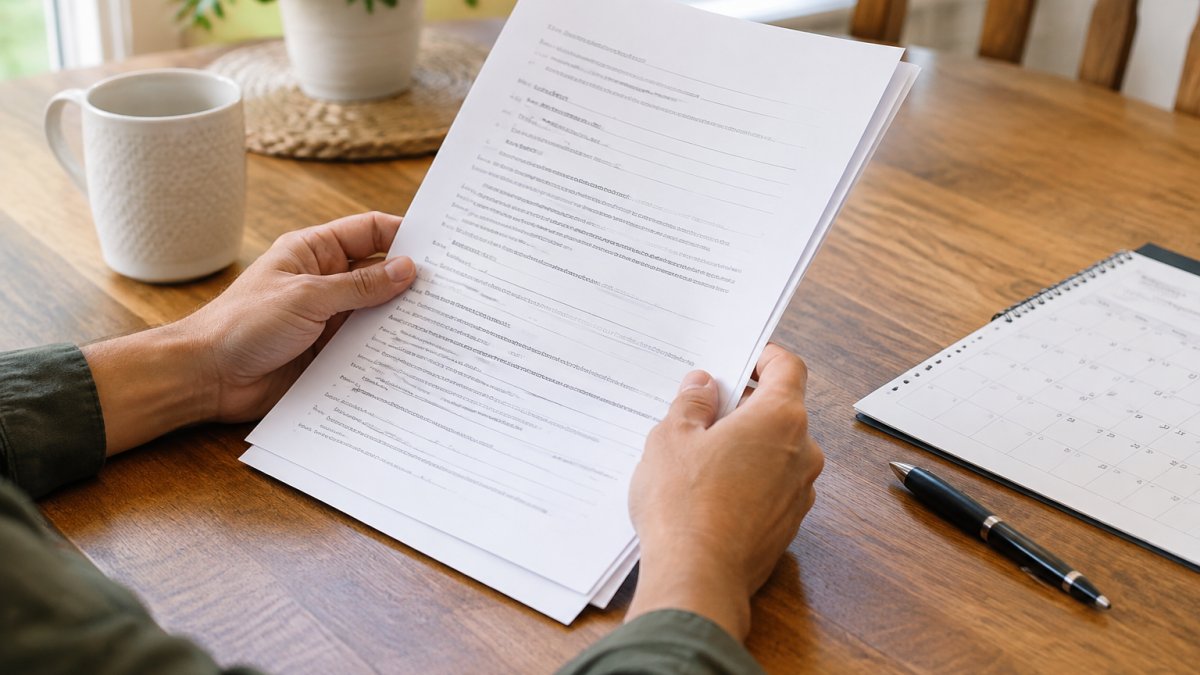
Your release paperwork is the instruction sheet for staying out of jail, and every line on it carries weight. Read it before you leave the building if you can, and ask the releasing officer to explain anything you do not understand.
What the Release Type Tells You
The first thing to find on your paperwork is how you were released. The label matters because it determines what you owe and what happens next.
- Release on recognizance (ROR) or personal recognizance: you are released on your promise to appear, with no money posted. You still have a court date and still must appear. ROR does not mean the case is closed.
- Citation or notice to appear: an officer releases you with a written order to appear in court on a set date, often for lower-level offenses. The citation is the charging document in many of these cases; missing the date can lead to a warrant.
- Bond or bail: money or a bond is posted to secure release, often with conditions attached. The bond agreement is a contract, read the conditions, because violating them can forfeit the bond and return you to custody.
Translating the Conditions Into Daily Obligations
Conditions are written in legal shorthand. Here is what the common ones actually require:
- Appear at every scheduled court date. One missed date can trigger a bench warrant, even if the miss was accidental.
- Do not leave the county or state without permission. Know which one your paperwork says, and get permission in writing before any trip.
- No-contact order. Do not call, text, email, message, or contact through third parties any named person. A no-contact order can also bar contact with witnesses.
Notice to Appear, Summons, and Court Dates
A notice to appear is a written order to show up in court on a set date. A summons is the court's formal version, usually mailed or delivered. Both create a legal duty to appear. Treat every court date as mandatory. If your address changes, tell the court in writing and keep a copy of what you sent.
Deadlines and Time Limits
Filing deadlines and procedures vary by jurisdiction and by charge. What you can do is find the rules that apply to you: ask the clerk what the local rules require, ask the prosecutor's office whether a filing decision is pending, and ask a lawyer whether any deadline in your case is running.
Our step-by-step breakdown of what happens after bail paperwork explains each document and what to do with it.
If Charges Are Dropped Is It Still on Your Record
Dropped charges do not automatically disappear from your record. This is the part that surprises people most.
An arrest record can remain visible to background checks even when the prosecutor declines to file or later dismisses the case. Court records may show "dismissed" rather than erased.
Options that may apply, depending on your case and state law:
- Expunction: a legal process to destroy records of an arrest or case.
- Record sealing: limits who can see the record without destroying it.
- No conviction: accurate, but not the same as no record.
Eligibility rules vary by state and by how the case ended. If your case was dismissed, our guide on getting a bail bond refund after case dismissal covers the financial side.
What to Do If Police or Investigators Contact You Again
You have the right to remain silent, and you should use it.
Do not guess at details to seem helpful. Do not agree to a "quick conversation" without counsel. Statements made now can be used later.
Before any conversation, know your rights as a defendant in a county jail setting. Our article on the legal rights of defendants in Lubbock County jails lays out what you are entitled to.
The Sixth Amendment right to counsel protects your access to a lawyer at critical stages of a criminal case.
Getting Help With Bail and Court Paperwork in Lubbock and Hockley Counties
Court paperwork is where cases quietly go wrong. A missed date, an outdated address, a condition nobody explained, each one can undo a release.
We help defendants and families in Lubbock and Hockley Counties get through the bail and release process. To reach our office for assistance, see our contact page.
For general background on how release and charging decisions work, the Bureau of Justice Statistics publishes national data on jail and court processing.
Release is a starting line, not a finish line. Charges can still be filed, court dates can still arrive, and paperwork still has to be handled correctly.
Frequently Asked Questions
Do criminal charges go away when you are released from jail?
No. Release from jail only ends the detention, not the case. A prosecutor or district attorney can still review the evidence and decide whether to file formal charges, and a warrant or summons can follow. Release paperwork often sets a court date you must appear at. Keep your release documents, check the court docket for your case status, and contact a licensed attorney if you are unsure whether charges are pending.
Can you be charged again after charges are dropped?
It depends on why the charges were dropped. If a prosecutor dismissed charges without prejudice, the case can be refiled while the statute of limitations is still open. A dismissal with prejudice is more final. Ask the court clerk or your attorney to confirm how the dismissal was recorded, and keep a copy of the dismissal order. Do not assume a dropped charge means the matter is fully closed.
What should you do if you are released without receiving court paperwork?
Do not wait for paperwork to arrive. Call the court clerk in the county where you were booked and ask whether a case number exists and whether a court date has been set. You can also search court records online or through the county docket. Write down the name of the person you spoke with and the date. If you cannot confirm your status, speak with a criminal defense attorney promptly.
How do you check pending criminal charges after release?
Start with the county court where the arrest happened. Search the court docket online by your name and case number, or call the clerk directly. Ask whether formal charges have been filed, whether an initial appearance or arraignment is scheduled, and what the case status is. Keep copies of everything you find.