 How-to
How to Lower Bail Amounts in Lubbock: A Step-by-Step Guide
Quick Summary
To lower bail amounts in Lubbock, an attorney or the defendant files a motion asking the court that set the bail to reconsider it. The judge weighs community ties, criminal history, flight risk, and ability to pay, so supporting documents matter.
- Confirm the current bail amount with the jail or court clerk before filing.
- Gather pay stubs, bank statements, and tax returns to document financial hardship.
- File the motion with the court that originally set the bail.
- Ask about a personal recognizance bond if the defendant has strong community ties.
- Never pay bail bond fees by gift card, cryptocurrency, or personal wire transfer.
Table of Contents
- Understanding Bail and Bond Before You Request a Reduction
- What Happens If You Can't Afford Bail
- How to Get Bond Reduced in Texas: Step by Step
- Preparing for a Bail Reduction Hearing in Lubbock County
- Alternatives to Cash Bonds You Can Ask the Court About
- Booking Your Bail Bond Consultation With National Bail Bond of Lubbock
- Frequently Asked Questions
Understanding Bail and Bond Before You Request a Reduction
Bail is the money or property a court requires to release a person from jail while their case moves forward. Most people who ask how to lower bail amounts in Lubbock start here, because the request makes more sense once you know what the court is trying to protect.
The court sets bail to make sure the defendant returns for every court date. A lower amount is not automatic. It usually takes a formal request, a clear reason, and paperwork that backs it up.
The difference between bail and bond
People use "bail" and "bond" as if they mean the same thing, but they are different. Bail is the amount set by the judge or magistrate. A bond is the promise, or the financial instrument, used to pay that amount.
- Bail: the dollar amount the court sets for release
- Bond: the paperwork and guarantee used to meet that amount
- Cash bond: the full bail amount paid to the court
- Surety bond: a bond written by a licensed bail bondsman for a fee
Knowing this difference matters when you talk to the court. A request to reduce bail asks the judge to lower the amount. It does not cancel the need for a bond.
How bail bond fees work
When a bondsman writes a surety bond, the fee is usually a percentage of the total bail amount.
Fee structures differ between companies. Always ask for the exact terms in writing before you sign anything.
Watch out: Be wary of anyone who asks for payment by gift card, cryptocurrency, or wire transfer to a personal account. Legitimate bail companies do not ask for those.
What Happens If You Can't Afford Bail
Many families reach this point and feel stuck. The bail amount is set, the person is still in jail, and the money is not there. This situation is common, and it is not the end of the road.
Several steps can help. A defense attorney or public defender can file a motion asking the court to reconsider the amount.
- Ask the court for a bail reduction hearing
- Request a personal recognizance bond if the person has strong community ties
- Ask about indigent status if the person cannot pay any amount
- Talk to a criminal defense attorney about the next filing
Waiting can cost time. The sooner a request is filed, the sooner a judge can review it.
How to Get Bond Reduced in Texas: Step by Step
Bail in Texas is set through a process that begins with the arrest and continues through a magistrate hearing, then may move to a later request for a change.
Follow these steps to request a lower amount:
- Confirm the current bail amount with the jail or the court clerk.
- Gather information about the defendant's job, family, housing, and prior court record.
- Contact a criminal defense attorney or ask the public defender's office about filing a motion.
- File a motion for bond reduction with the court that set the bail.
- Attend the hearing and bring documents that support the request.
- Follow the judge's order and arrange release right away.
Understanding Texas Code of Criminal Procedure Article 17.151
Texas law addresses release from custody, and the specific conditions depend on the charge and the case history. Check the current text on the Texas Legislature's official website, or ask your attorney to confirm how it applies to your case.
Factors judges consider when setting bail
Judges look at several factors when deciding whether to lower bail. These usually include:
- The seriousness of the charge
- The defendant's criminal history
- Ties to the community, such as employment and family
- Flight risk, meaning the chance the person will not return to court
- Public safety concerns
- The defendant's ability to pay
The strength of the answers to these factors shapes how a judge weighs a request for a lower amount.
The process for requesting a lower bond amount in Texas follows a clear sequence of steps.
| Step | What to do | Timing |
|---|---|---|
| 1 | Confirm the current bail amount with the jail or court clerk | Before filing |
| 2 | Gather information on job, family, housing, and prior record | Before filing |
| 3 | Contact a criminal defense attorney or public defender | Early |
| 4 | File a motion for bond reduction with the setting court | After attorney review |
| 5 | Attend the hearing and bring supporting documents | On hearing date |
| 6 | Follow the judge's order and arrange release right away | After ruling |
Preparing for a Bail Reduction Hearing in Lubbock County
A hearing goes better when the family arrives organized. Judges generally look for supporting facts rather than bare requests. The steps below describe what a typical motion packet looks like and how to build it before the hearing date.
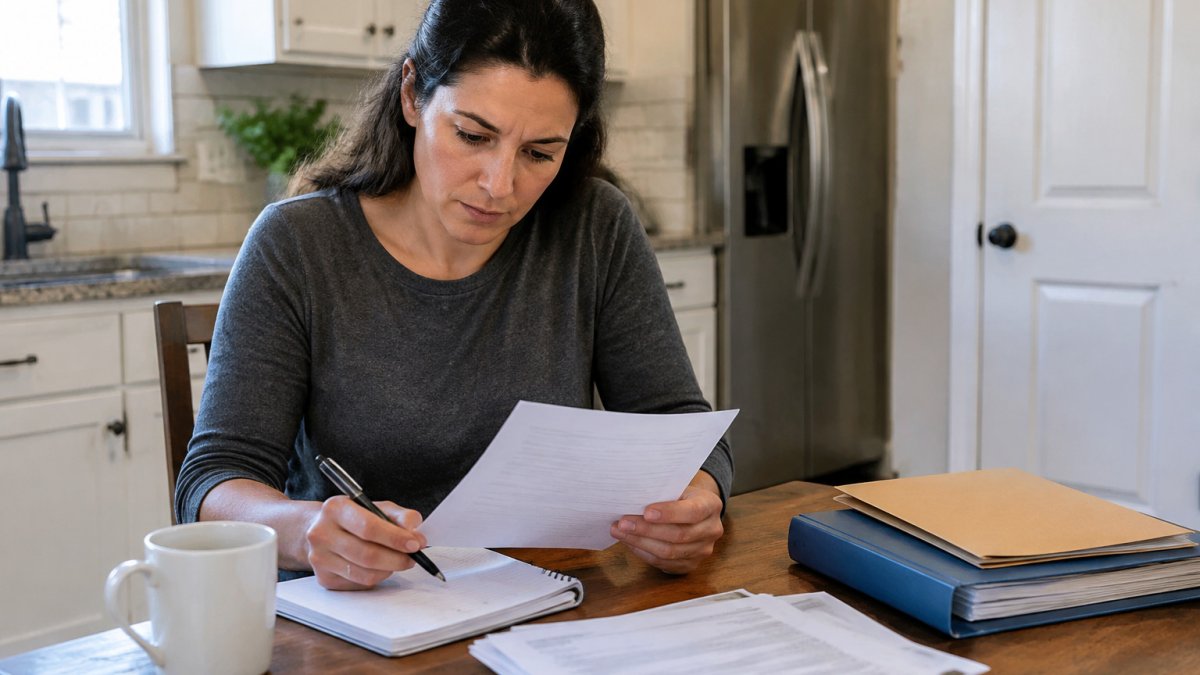
!A family member sitting at a kitchen table reviewing paperwork with a notepad and organized documents beside them
Documenting financial hardship
A judge deciding on a reduction will want to know what the family can and cannot pay. Build the financial picture around documents the court can verify rather than summaries alone. Useful items include:
- Pay stubs from the last 30 to 60 days, showing gross and net pay
- Bank statements for the same period, so the judge can see actual cash flow
- Tax returns from the most recent year, particularly when income has changed
- Proof of unemployment or reduced hours, such as a letter from the employer or a state benefits notice
- A completed financial affidavit, which the court may provide or which your attorney can prepare
- Records of fixed monthly obligations, such as rent, utilities, child support, and vehicle payments
Create a one-page summary that lists monthly income against monthly expenses, then attach the source documents behind each number. A clear summary backed by supporting documents helps the judge review the request.
Watch out: Do not guess at figures or leave out a debt you expect the state to find, because an inconsistency between your summary and the records can undermine the whole request.
Lubbock County local court procedures and timelines
The path a motion takes depends on which court set the bail and where the case sits, so confirm the procedure with the court clerk. Confirm the following with the district or county clerk before you file:
- Which court set the bail, since a motion generally must be filed with that court
- Whether the motion requires a written request, a proposed order, or both
- The current docket for bail or bond hearings, which the clerk can describe even if they cannot promise a date
- Whether the defendant must attend in person or can appear through the attorney
- Whether pretrial services has prepared a report that the judge will review
Timelines vary with the court's calendar and the complexity of the case. Timelines vary with the court's calendar and the complexity of the case, so do not assume a set date until the court issues one. Ask the clerk how the hearing is scheduled and whether it will be posted, and keep notes of each call, including the date, the staff member's name, and what was said.
Because local practice can shift, treat any timeline you hear as a working estimate and confirm it again before the hearing.
Alternatives to Cash Bonds You Can Ask the Court About
Cash bail is not the only option. Judges can consider other ways to secure a defendant's return to court, and each alternative carries its own conditions and failure consequences. Ask your attorney which of these may fit the case and how to present it.
-
Personal recognizance bond: release based on the defendant's written promise to appear, with no money paid up front. Judges consider factors such as residence, employment, family ties, and prior appearance history.
-
Supervised release: release with scheduled check-ins with a pretrial officer, who reports compliance back to the court. Supervision usually comes with a requirement to notify the officer of address or employment changes, and a missed check-in can trigger a warrant.
-
Electronic monitoring: tracking through an ankle device or a phone-based check-in app. Whether electronic monitoring is ordered depends on the court and the case.
-
Reduced bond with conditions: a lower dollar amount paired with rules such as a curfew, no-contact orders, alcohol testing, or drug testing. Conditions must be realistic for the defendant's schedule, since violating them can lead to revocation and a return to jail.
-
Third-party custodian: a responsible adult who agrees in writing to supervise the defendant and report violations. The custodian should understand the obligation fully before agreeing, because the court may hold them accountable for lapses.
When you raise any alternative, present the specific facts that support it, such as a verifiable job offer, a lease, or letters from family members, rather than general statements of good character.
Booking Your Bail Bond Consultation With National Bail Bond of Lubbock
If you need a bondsman to write a surety bond, a clear conversation at the start helps everyone. National Bail Bond of Lubbock serves Lubbock and Hockley Counties and is available 24/7.
Ask the company to explain the fee, any collateral required, and how the paperwork works. You can reach the team through the contact page to request a consultation. If you want to see the range of help available first, review the services page before you call.
Before you pay anyone, check their license and confirm the terms in writing. Our guide on avoiding bail bond scams in Texas explains how to verify a bondsman. For a practical overview of what to expect at the hearing, read how to prepare for a bail bond meeting. Knowing the typical timeline from arrest to release, covered in how long bail takes, can also help your family plan.
Frequently Asked Questions
How do you get bond reduced in Texas?
A bond can be reduced by filing a motion for bond reduction with the court that set the bail, typically through a criminal defense attorney. The motion should explain why the current amount is excessive, such as the defendant's ties to the community, employment, family responsibilities, prior appearances in court and any financial hardship. The judge will review the motion and may schedule a bail reduction hearing. Outcomes depend on the facts of the case and the judge's discretion, so the request should be supported by documentation rather than general statements.
What happens if you can't afford your bail?
If a defendant cannot afford the bail amount, they generally remain in jail until the bail is paid, the bond is reduced or the case is resolved. Options include asking the court for a reduction, requesting a personal recognizance bond or another alternative, or working with a licensed bail bond company, which typically charges a fee based on the bail amount. Ask about refund terms before you agree. Requesting a hearing promptly can shorten the time spent in custody, and an attorney can explain which options apply in a specific Lubbock County case.
What information can support a request to lower bail?
Useful supporting information includes proof of steady employment, a lease or proof of residence, school or family obligations, prior court appearances, and a financial affidavit documenting income, expenses and assets. Letters from employers or family members and records showing no prior failures to appear can also help the judge weigh flight risk and public safety. Gathering these documents before the hearing gives the court concrete facts to consider rather than unsupported claims.
What are the alternatives to paying a cash bond?
Alternatives to a cash bond may include a personal recognizance bond, which releases the defendant on a promise to appear without a payment, or a surety bond written through a licensed bail bond company. Judges may also impose conditions such as supervised release, electronic monitoring or regular check-ins. Whether any alternative is available depends on the charge, the defendant's history and the court's discretion, so the defense attorney or court clerk should be asked which options apply to the specific case.