 how-to
What Happens During Jail Booking: A Step-by-Step Guide
Table of Contents
- What Happens During Jail Booking: An Overview
- The Jail Booking Process: A Step-by-Step Walkthrough
- Step 1: Arrival at the Sally Port and the Initial Pat-Down
- Step 2: Property Inventory and the Receipt
- Step 3: Personal Information and the Booking Record
- Step 4: Fingerprinting and the Mugshot
- Step 5: Medical Screening and Health Questions
- Step 6: Classification and Housing Assignment
- Step 7: Holding Cell or Housing Unit
- How Long Each Step Takes
- How Long Does Jail Booking Take?
- Rights, Questioning, and Access to Counsel During Booking
- What Happens to Belongings, Medication, and Accessibility Needs
- The Jail Booking and Bail Process: How Release Works
- How to Find Someone in Jail After Arrest
- Conclusion: What to Do While Someone Is Being Booked
- Frequently Asked Questions
Last Updated: October 6, 2026
What Happens During Jail Booking: An Overview
Jail booking is the intake process a county jail runs after an arrest, where officers identify the person, record the charges, search them, and decide how they will be held.
Most people picture booking as a quick stop between arrest and release. In practice, it is a series of recorded steps, and each one can add time.
The booking record created during intake becomes the source for jail records, court dates, and bond decisions later, so getting the details right matters.
The Jail Booking Process: A Step-by-Step Walkthrough
The jail booking process follows a set order at most county jails: search and inventory, identification and records, then health and charge screening. The arresting officer hands custody to jail staff, and the booking officer takes over.
Step 1: Arrival at the Sally Port and the Initial Pat-Down
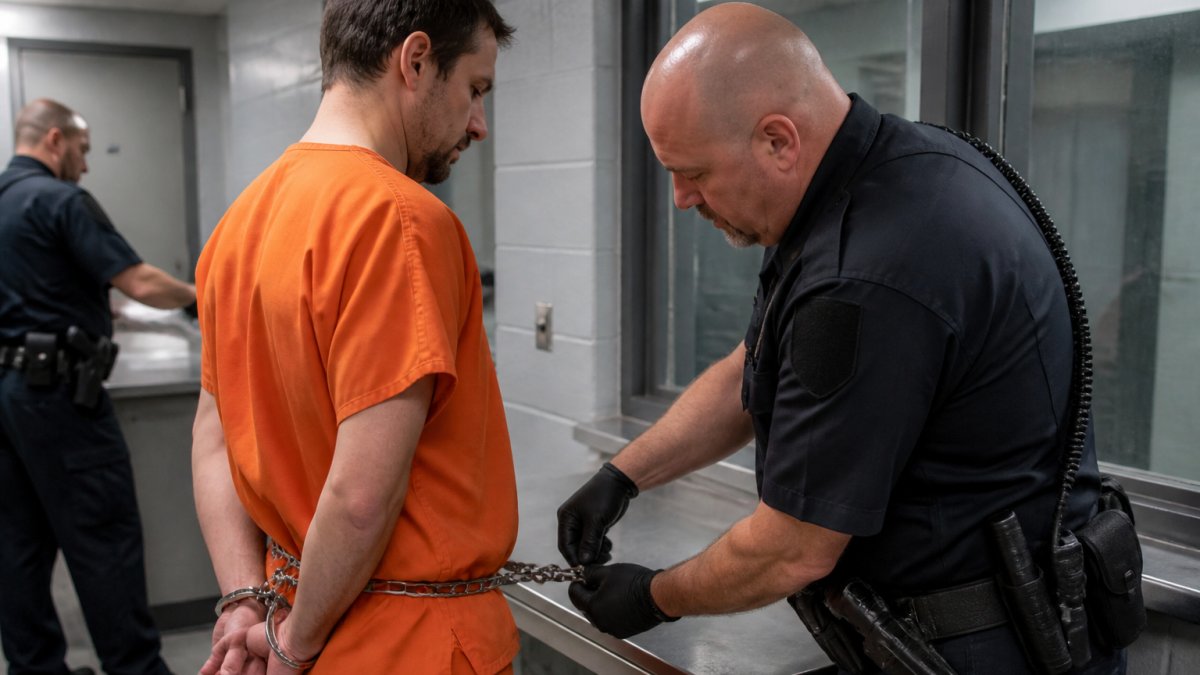
The vehicle enters through a secure garage called the sally port. The arresting officer walks the person to an intake bench or holding area, where a booking officer takes custody. The first step is a thorough search, not the quick street pat-down, but a more complete one that may include removing shoes, belts, and outer layers. Officers are looking for weapons, drugs, lighters, and anything usable as a weapon in a holding cell.
Step 2: Property Inventory and the Receipt
Personal belongings are listed one by one. This property inventory typically covers:
- Clothing and shoes
- Wallet, cash, and cards
- Phone and electronics
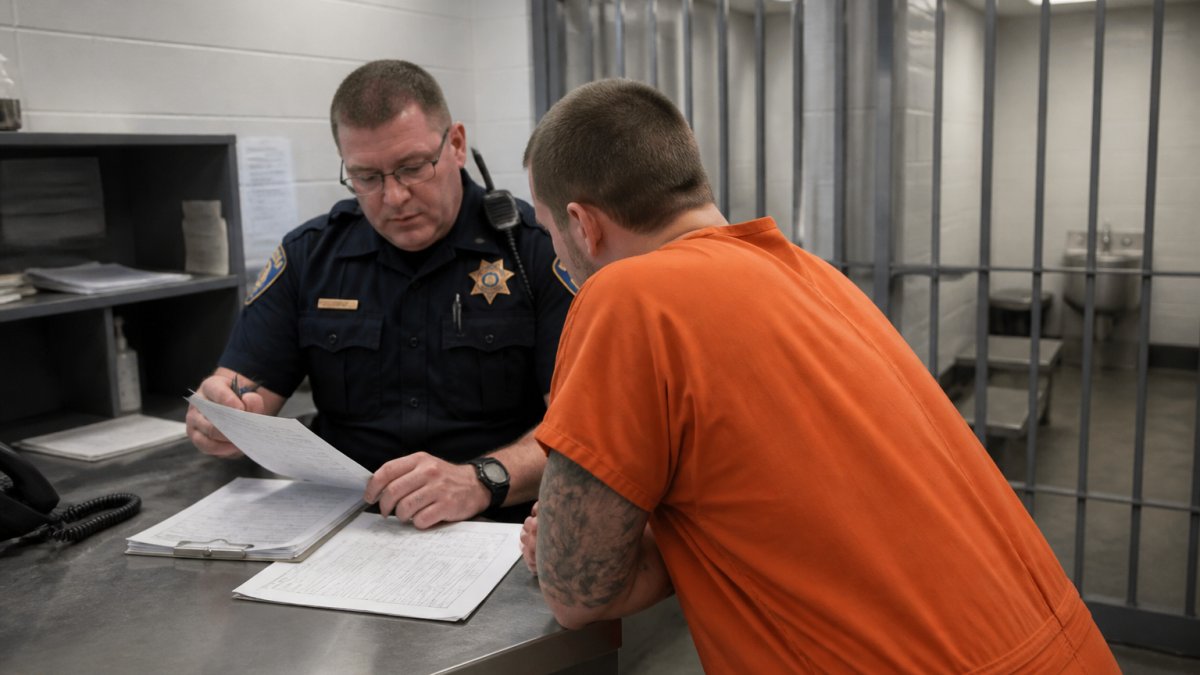
Each item is logged into the booking record, and the person usually signs or initials the inventory. That signature is the legal record of what was taken in and what should come back at release. If you are the person being booked, ask for the receipt number, it is the fastest way to trace property at release.
Step 3: Personal Information and the Booking Record
Next comes identification. Staff record the person's full name, date of birth, address, Social Security number, and other identifiers. This is administrative data entry, not an interview about the case. This is also when the alleged charges are entered. Charge entry must match the arresting paperwork exactly; a mismatch between the officer's report and the jail's charge screen is a common cause of delay, usually resolved by a call between the jail and the arresting agency.
Step 4: Fingerprinting and the Mugshot
Fingerprinting is standard at this stage. Most facilities use an electronic scanner, often called a Live Scan system, that transmits prints to state and federal databases, which run background and warrant checks in near real time.
If the person has been arrested before, the prints may match an existing record, which can speed up identification but also flags prior history for the court.
Step 5: Medical Screening and Health Questions
A nurse or trained staff member asks health questions: current conditions, injuries, medication, mental health needs, and whether the person is withdrawing from anything. The assessment protects the person's safety in custody and flags anything needing medical clearance before housing. If the person is intoxicated, injured, or showing signs of a medical or mental health crisis, booking may pause here and the person is routed to a medical clearance step, often at a hospital or a jail medical unit, before intake continues.
Step 6: Classification and Housing Assignment
Once screening is complete, staff assign a custody level and housing unit. Classification considers the alleged charge, criminal history, medical and mental health needs, and safety concerns such as gang affiliation or prior conflicts with other inmates.
Step 7: Holding Cell or Housing Unit
From classification, the person is either placed in a temporary holding cell (often called a tank) or moved directly to a housing unit. In a holding cell, they may wait hours for a bed; in a housing unit, they receive jail-issued clothing, a bunk assignment, and an orientation to facility rules.
How Long Each Step Takes
There is no fixed clock, but a common pattern at a mid-sized county jail: search and property inventory, 20 to 45 minutes; identification and records, 30 to 60 minutes; fingerprints and mugshot, 15 to 30 minutes; medical screening, 15 to 45 minutes; classification and housing, 30 minutes to several hours. A routine booking lands between two and six hours.
How Long Does Jail Booking Take?
Jail booking typically takes one to several hours, and the range is wide because intake volume drives everything. Several factors push the timeline longer:
- Intake volume. Multiple arrests at once mean everyone waits.
- Warrant and background checks. A hit on an out-of-county warrant adds steps.
- Medical screening. Health needs or medication questions require extra review.
Rights, Questioning, and Access to Counsel During Booking
Booking is an administrative process, not an interrogation. Jail staff run the intake steps; they are not there to question the person about the case.
Two rights matter most during this window:
- The right to remain silent. Questions about the alleged offense do not have to be answered.
- The right to counsel. The person can ask to speak with a lawyer, and booking staff must allow reasonable access to a phone.
What most guides miss is the distinction between booking staff and investigators. A detective may try to talk to the person during or after intake, and anything said then can be used later.
What Happens to Belongings, Medication, and Accessibility Needs
Most booking guides stop at "belongings are held and medication goes to medical." That leaves out what families actually need: what a property receipt does, how prescriptions get verified, and how to get an accommodation request acted on.
Belongings: The Property Receipt Is the Whole Game
Personal belongings stay with the jail until release, and the property inventory from Step 1 governs what comes back. Two things matter:
- The receipt number. Every logged item is tied to a receipt or inventory number. If you are the person being booked, memorize or write down that number if you can. At release, the receipt is what staff use to pull your property.
- What is held versus what is stored. Some items are held at the intake desk for quick return at release (wallet, keys, phone). Others are bagged and moved to long-term property storage (street clothes, bags, larger items), which can take longer to retrieve at release.
Some items are never allowed into a housing unit: street clothes, shoes with laces, belts, and phones are held in property storage while the person changes into jail-issued clothing. Cash is typically deposited into a commissary account, recorded separately from the inventory.
Medication: Verification, Not Just Confiscation
Medication is handled differently from other property. Prescription drugs are taken into medical custody, verified, and dispensed by jail medical staff on a set schedule. Delays happen at verification: if the prescription cannot be confirmed with the pharmacy or prescribing doctor, the medication may be held until it is.
A few practical points:
- Bring the bottle, not just the pill. Having the original labeled bottle with the prescribing doctor's name and the pharmacy phone number makes verification much faster.
- Over-the-counter medication is often restricted. Even common items like ibuprofen or antacids may be treated as contraband unless approved by medical staff.
- Family members should not bring medication to the lobby. It will not be accepted that way. The correct channel is the jail's medical unit, and only after intake has been completed.
Accessibility Needs: Get the Request on the Record
Accessibility needs are easy to overlook in the rush of intake. If the person uses a wheelchair, hearing aids, glasses, a cane, or has other needs, say so clearly during intake, and ask that it be noted in the booking record.
Jails are required under the Americans with Disabilities Act to accommodate disabilities, but the request has to be on the record to be acted on. A few specifics:
- Glasses and hearing aids are usually allowed to stay with the person rather than going into property, because they are medical necessities. If they are taken, ask for them back at medical screening.
- Wheelchairs and mobility devices are typically provided by the facility if the person's own device cannot be accommodated in a housing unit. The person's own device may be stored and returned at release.
- Interpreters and communication aids must be provided for people who are deaf, hard of hearing, or have limited English proficiency. This is a right, not a favor.
If you are a family member calling on someone's behalf, ask the jail's records or medical line whether an accommodation has been noted. If it has not, ask how to submit the request in writing.
The Jail Booking and Bail Process: How Release Works
Release does not happen at the end of booking. It happens after booking, when a judge sets bail or the person is otherwise cleared to go.
The sequence looks like this:
- Booking finishes and the person is housed.
- A magistrate or judge reviews the case, often within a day.
- Bail or bond is set, or the person is held without bond.
- A bail bond is posted, or the person waits for a bail hearing.
- Release processing runs, and the person walks out.
A bail bond is a promise, backed by a bondsman, that the person will appear at every court date.
This is where we come in. NATIONAL BAIL BOND OF LUBBOCK works with defendants to navigate the court system.
How to Find Someone in Jail After Arrest
Finding someone after arrest starts with the county jail roster. Most county jails post a searchable list of current inmates, updated as people are booked and released.
To search, you usually need:
- The person's full legal name
- Date of birth, if the name is common
- The county where the arrest happened
If the roster shows nothing, the person may still be in booking and not yet listed. Call the jail directly with the name and ask whether they have been processed into a housing unit.
Booking creates the record that everything else depends on: charges, bail, court dates, and release. Verify the name and charge details early, because errors there slow down every step after.
Conclusion: What to Do While Someone Is Being Booked
Waiting through booking is the hardest part, because there is nothing to do but wait until it ends. The good news is that the process is predictable once you know the steps, and release becomes possible the moment bail is set.
If your family member was arrested in Lubbock or Hockley County, NATIONAL BAIL BOND OF LUBBOCK can help you move as soon as the bond is posted.
Frequently Asked Questions
What information and personal property are collected during jail booking?
Booking officers record your full legal name, date of birth, address, Social Security number, and physical description. They also take fingerprints, a mugshot, and details about the alleged charges. Personal belongings such as clothing, jewelry, cash, and phones are inventoried item by item, sealed in a property bag, and stored. You receive a receipt listing everything taken. Medication is typically documented and reviewed by medical staff, who decide whether it can be continued in custody or must be re-prescribed by the jail's provider.
How long does jail booking take?
Most bookings finish in two to eight hours, but the wait can stretch to twelve hours or more at busy county jails. Time depends on how many people are being processed at once, whether a warrant check or background check turns up anything, and how long medical screening takes. If the person is intoxicated or injured, they may be held in a medical observation cell first, which adds hours. Calling the jail directly for a custody status update is the fastest way to get a real estimate.
Can bail be posted before booking is complete?
In most cases, no. The jail must finish booking and set a bail amount before a bond can be posted. A bail bond company can prepare the paperwork in advance so that once the amount is set, the release moves quickly. In Lubbock and Hockley Counties, a bondsman can often have someone out within a few hours of the bond being posted, depending on jail staffing and intake volume. Booking time and bail processing run on separate timelines.
What should family members do while someone is being booked?
First, confirm the person is actually at the jail by calling the facility or checking the online jail records. Write down the full legal name, date of birth, and any booking number you receive. Then call a licensed bail bond company to start the paperwork. Avoid sending money to anyone who demands gift cards, Bitcoin, or payment before verifying their license. A legitimate bondsman has a physical office, a state license, and a clear written agreement.